What to Eat
Thoughts on Good-for-You Foods
The airwaves are full of warnings about holiday weight gain and how many pounds are put on during this time of year. Rather than alarm you, here’s my take on having a simple and sensible healthy relation with food, not just now but all year long. I take the inspiration for this post from Michael Pollan, who has written many incredibly informative books about healthy eating and other health-related subjects. One of them is a little volume called Food Rules: An Eater’s Manual. In it, he condenses 64 guidelines into 3 general rules: 1) Eat food, 2) Not a lot, 3) Mostly plants. Lately, I’ve been thinking about the first of these rules.
By “eat food” Pollan means real food—whole, unprocessed foods—nothing that comes in a box or is manufactured in a food factory. This, to me, is the most important part of healthy eating. There are a couple of ways to keep this in mind when you’re grocery shopping. One is to focus on shopping at the outer edges of the supermarket, where the fresh foods are. Another way to think about this is only purchasing something your grandmother or great-grandmother would recognize as food. They would not automatically reach for processed food that comes in a box, which tends to be high in saturated fat, or consider using premade gravies or sauces, which tend to be high in salt. Plus, nearly all types of processed foods contain unpronounceable ingredients that sound more like chemistry than actual foodstuffs.
Mainly, “eat food” is a reminder that the foods we ought to be eating are the same ones our ancestors have been thriving on for millions of years. Plus, if our health matters to us, we ought to eat foods as close to their source as possible, that is, the place where they were grown or raised. These are the seasonal foods that nature has provided for us.
The era of factory food, which has now morphed into the industrial complex that’s become known as “Big Food,” is only about 100 years old. It was, and still is, designed to make money by using cheap ingredients and keeping you eating it, not keeping you healthy. In fact, it makes you sicker, and it is more frequently becoming the source of many of the diseases of modern life.
Real Food Varies by Region and Our Personal Taste
But that’s not the end of the story. In the panoply of fresh, wholesome, nutritious food, there are still differences in taste, preference, and foods that just agree with you from a comfort standpoint as well as a health perspective. Humans have existed well and adopted many eating preferences that have been influenced by climate and geography. The extreme example is the Inuit Eskimos, who do very well on mainly animal protein and fat, plus a bit of sea vegetables and seaweeds. There are other variations on this theme that have developed over time, depending on the part of the world your ancestors lived in and the sources of food that were available for them to eat. Modern ethnic cuisines all reflect the history of regional food, going back many generations and originating with the ingredients that were geographically available. Chances are, you grew up eating the same types of food as your ancestors, as these food traditions were passed down through the generations and are the ones your body and your DNA are accustomed to.
Our ancestors were all hunter/gatherers before the age of agriculture began about 10,000 years ago. After that, some people began settling down in cities, and the regional variations in diet, cooking styles, and favorite dishes that developed since that time are myriad in their variety. Some of our ancestors stayed hunter gatherers until very recently. Yet despite all these differences in cooking styles and ingredients, the food itself has all been “real” food. And it’s all been healthy for us up until the modern age of mass production. In fact, “Big Food” is the primary explanation for the skyrocketing rates of modern metabolic disease and heart disease, both of which are relatively modern phenomena.
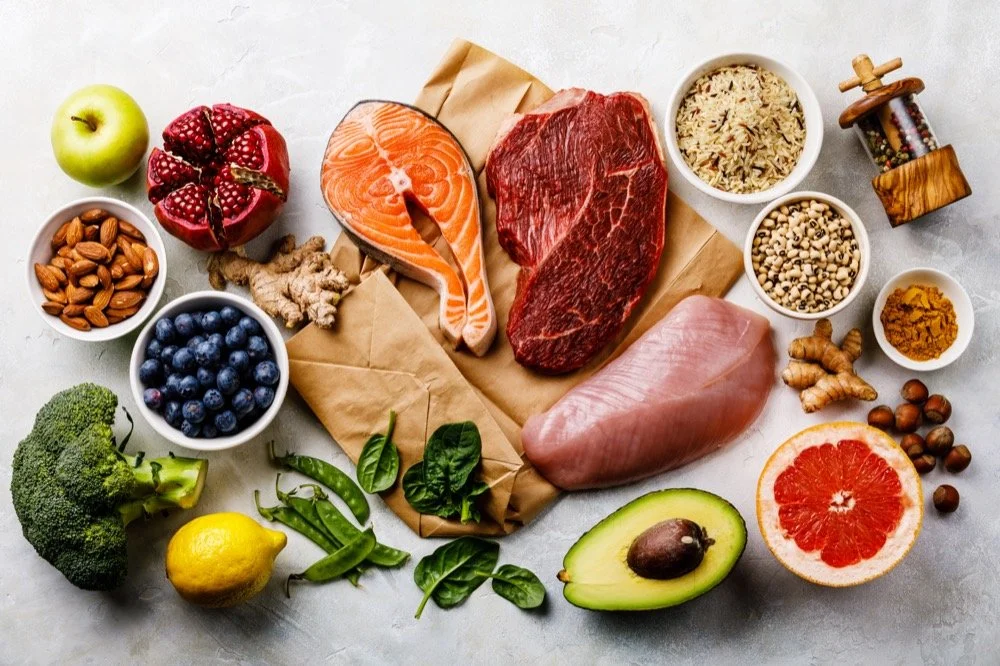
News Flash: There Are No Superfoods
Despite all the marketing claims, no single food will make you healthier just by eating it. If you experiment on yourself and do some research, you will find many foods that you like and don’t cause any digestive discomfort, as well as ones that have the macro and micro nutrients your body needs and thrives on. A good place to start is by doing some form of multi-week detox like I did many years ago. I found it to be a life-changing experience—it changed how I eat and what I eat. One of the most important lessons of that time was to eat foods that are good for my microbiome, the trillions of bacteria that live in my gut. Those bacteria love the fiber that vegetables and whole grains contain. (Kimchi, sauerkraut, yogurt and kefir are all good sources of different digestive bacteria.)
Not Too Much
There is no substitute for listening to your body when you’ve had enough to eat. I spent years eating so fast that I had no time to realize how full I was. When I did it was too late, and I was in that all too familiar lethargic and bloated state, when digesting is the only thing your body can focus on, to the detriment of your energy levels and your immune system. When your stomach tells you its full, STOP EATING! Before you decide to have more, give yourself a rest to see if the fullness recedes. Remember, you have a choice her. One of the most pernicious customs of modern life is eating beyond our capacity to digest, much of which is fuelled by social pressure. Your body doesn’t need or want that extra food. It’s not like starvation is around the corner.
I’ve already written on the benefits of temperance in an article about the 15th century centenarian Luigi Cornaro. Another great man of history who weighed on this subject was Benjamin Franklin, who wrote in his autobiography that temperance for him meant “Eat not to dullness, drink not to elevation.”
So, just as Michael Pollan says, eat food (real food) and let your body and your common sense be your best health advisor. A sensible variety of fresh fruits and vegetables and pasture-raised or sustainable animal protein works best for me. Getting to know your body, and really listening to it, is the first real lesson in knowing how and what to eat. Nature has given us all the tools we need to be healthy, we just need to use those gifts. There are many paths to eating well for health and longevity. There is no master list of do’s and don’ts for every possible food available to us. The right path for you is simply to determine what works for you as the result of a considered and examined health practice that gives you what you want out of life.