We Are All Teachers (and Students)
A Big Life Lesson, That’s Helping Me Tame Criticism
I can be a pretty “judgy” and critical person—much of which I keep to myself. (I try to consciously pay attention to this negative personality trait, but it sometimes creeps into my thoughts.) It’s a complicated experience and is often linked to my own self-criticism and doubts about myself, my self-worth. One day I was handed a great gift that has given me a tool to avoid that “judginess,” now and in the future. Here is a story of something that happened to me recently and taught me a great lesson about life, others, and myself.
In London, I have coffee or tea with a couple of friends a few mornings every week. We meet in a very small café, and we sit on one of only two small benches discussing whatever strikes our fancy. Topics range from the news of the day to personal news, philosophy, religion, health, you name it. Nothing is off limits. This is all within earshot of the owner/barista and the patrons, most of who are coming in for takeout. We’re something of a fixture there, and some patrons say hello or join in the conversation for a few minutes while waiting for their order.
One regular takeout patron started talking to us a few times because he overheard what we were talking about and was intrigued that we met so regularly for our lively discussions. He joked that we were solving the problems of the world and needed to go public with our views because the world needed fixing, and much of what we said made an incredible amount of sense. He was a smiley sort of cherubic man, about my age, who did not look to be in very good health, a sort who is common in England. Or so I thought. Privately, I dismissed him as a bit of a clownish, “hail fellow well met” type, someone who is always on the lookout for a quip or a joke but not serious about very much. Unfortunately, that kind of criticism can be my way of feeling superior to others, which is at the heart of the lesson I was about to learn.
Stunned Silence
One morning I arrived early to the café, and the owner was there by himself. He handed me a book titled How to Be a Better Human by Mike Dickson. The owner knew about my book and said that another patron had just written this one. Then he told me who it was. You guessed it, the same guy I described above. The man I had quickly judged and dismissed.
It was a small book, and as I leafed through it, I sat in stunned silence. It turns out that Mike Dickson has lived in the world of charity and nonprofits all his life, and his recipe for “becoming a better human” and making your life worthwhile involved doing things for others instead of only worrying about yourself. It is a beautiful little book, full of anecdotes and heartwarming stories.
I can’t describe how overwhelmed I was with the gift of his book and, especially, with how wrong I was about him from our brief encounters. How could I have been so wrong? I asked myself. What is it in me that caused me to judge him that way? It made me want to talk to him and get to know him better. My rush to judgment about him was not just inaccurate—that was the start of my realizations. Over the next few days, the experience was about to teach me something about myself that has since served me very well.
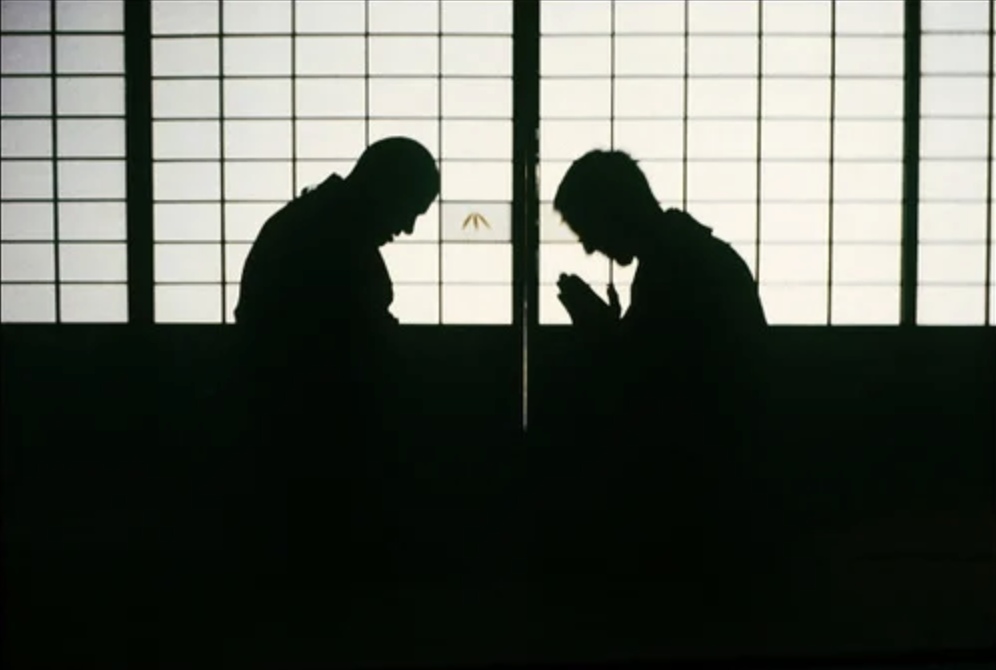
A couple of days after receiving his book, on a sunny Saturday morning, I was walking our dog, and a scene from a book I’d read popped into my mind. In this passage, a Zen master asked his students, “Who wants to teach the class today? Who wants to switch places with me?” The point was to show that the separation between student and teacher is very slight. We are all teachers, and we are all students, and we can all learn a great deal from one another as well as from listening to our own internal wisdom. (Ask any good teacher how much they “learn” from their students.) And immediately after that Zen master scene popped into my head, Mike Dickson and his book popped into my head.
I realized that my own short-sighted judgment of Mike had robbed me of the opportunity to connect with him and to learn from him. It also robbed me of the opportunity to teach anything to him. It was a wonderful insight that has stayed with me ever since.
My rush to judgment was based on my own stale views of class and type as well as seeing myself “above” others. I could have viewed Mike as a potential teacher, someone I could learn something from, as well as see him as a potential student, someone who could learn something from me. This would have completely avoided my inner criticism of him. More, it would have prompted me to actually talk with him, get to know him, and possibly build a rewarding friendship full of opportunities to teach and learn from each other.
This incident stuck with me. I now try to see people more in this light, rather than quickly rushing to judgment by what someone is wearing or doing or acting or saying. I call it my personal antidote for criticism. There is always something we can learn from anyone, even if that something is what not to do. And I can still be in their debt for having learned something from them.
I have since spoken with Mike and told him this entire saga and shared the life lesson that he and his book taught me. We then had a lively discussion about many subjects, including our books, and speak regularly when he comes for coffee. (I’m looking forward to teaching him something, maybe about health, but who knows.) This entire episode has resulted in feeling much freer to communicate with others in a more open way than I have for much of my life. I can now count it as one of the biggest benefits of my “life yet to live” journey that I have been on for almost 20 years. Who says we can’t experience profound realizations—and make profound changes—as we get older?