Do You Know Tolstoy’s Story of the Three Hermits?
“The privilege of a lifetime is being who you are.”
Joseph Campbell
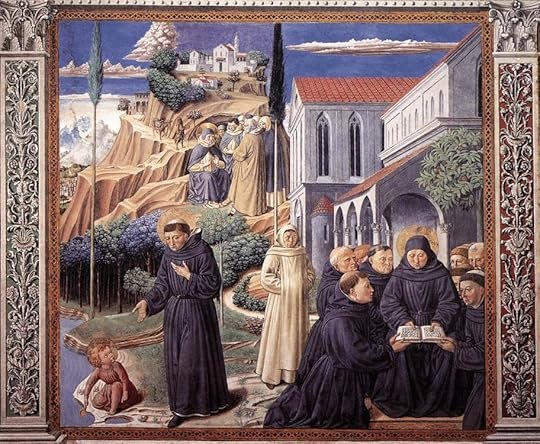
One of my favorite short stories is called “The Three Hermits” by Leo Tolstoy. It tells the story of a bishop and some pilgrims who are traveling on a fishing boat to visit a remote monastery. The pilgrims tell the bishop they are near the island where three hermits are said to live, three men who have given up worldly distractions to pray and find salvation. The bishop informs the captain that he wishes to stop at the island and visit them. The captain tries to dissuade him, calling them three old fools, but the bishop prevails.
Once on the island, they encounter the three hermits and explain who they are. The hermits are very honored and impressed, and they venerate the bishop as a holy visitor. The bishop asks how they pray for their salvation, at which point the men look upward and recite the phrase, “Three are ye, three are we, have mercy upon us.” At that point the bishop says he can teach them prayers from the Bible, ones that the scripture says are the most effective, and he proceeds to teach a few prayers to them, including the Lord’s Prayer. With great difficulty, the simple hermits try to memorize the prayers before the bishop leaves to continue his journey.
Once back on the ship and underway, the crew and passengers see something that seems to be following them on the water. As this visage gets closer, they see that it is the three hermits running after the ship—on top of the water as if it were dry land. Once they reach the ship, they stand on the water and cry that they have forgotten all the words the bishop taught them, asking if he could teach them again. At that point, the bishop is humbled and says to the men that it is not up to him to teach them, that they should continue saying their own prayer, and that God hears their simple prayer just as well. At that, the hermits smile, turn around, and walk back over the water to their island.
The Light that Burns in Each of Us
The lesson of this story is that being true to yourself and finding your own way in life is the best path to living your own truth. All the teachings in the world would not have given the three hermits what they had found in their honest devotion, belief, and faith. And in our modern lives, all the conventional wisdom about what to do and how to be, while comforting, can’t give you answers to the most crucial questions in life. Only your committed personal journey to follow the truth in your heart (or your soul, or conscience, if you will) can do that.
This is perhaps the biggest lesson I have learned over the past 20 years. My health journey, my “daughter journey” (my commitment to focus on raising on my young daughters), and my life journey ever since that “aha moment” 20 years ago have been guided from a deeper place, one that became more present and accessible to me at that time. This awakening, this truth, is what informs my later-life journey of health, power, grace, and wonder. It is also what I strive to connect to every day. Inner personal power is much misunderstood subject in today’s world. It is a subject I am exploring more deeply in my new book.
I’m offering these thoughts here not as a lesson but to share “this is what works for me.” In my first book the dedication to my daughters ends with the phrase, “May you live your lives by your own flesh and blood and your own inner light.” We are all born with an inner light and with miraculous, physical bodies that we don’t take care of nearly as well as we could. Very often, the light within us dims or even goes dark given the trials of life. The art of living well depends on finding your light again—your truth —and nourishing its energy to burn brighter and brighter within you. Tuning in to that wavelength amidst all the noise and distraction that life brings with it isn’t easy, but for me it is proving to be the most satisfying effort and chapter in my journey of life.