Beating Stiffness Before It Beats You
Experiencing stiffness is a universal experience. Think about your stiff back after bending over the garden or your stiff shoulders after painting a bedroom wall or your stiff legs after a lower-body workout in the gym. Have you found yourself uttering the words “I guess I’m just getting older”? Is stiffness really age-related? Can we beat it as we get older?
I wake up slightly stiff every morning. Sometimes my stiffness is linked to a big exercise session or a hard yoga class the day before. Thankfully, my morning routine increases my blood circulation enough so that the stiffness disappears most days, and within a half hour or so I am flexible again. Given all my exposure to exercise and yoga, I know that addressing the stiffness by moving gently is the best way to relieve it.
But I know many people who are afraid of stiffness and think it means they should rest or take a drug like aspirin or ibuprofen to alleviate it. They may chalk it up to “getting old” when that’s not the real cause. This got me thinking. Stiffness and its cause, inflammation, is actually a more complicated subject than most people realize. Worse, if left unchecked, today’s stiffness can lead to bigger issues down the road. And it is much more than simply a mobility issue, as you will see below.
Stiffness and Inflammation
Stiffness in our bodies is caused by inflammation. Inflammation is simply the immune system’s response to injury by increasing blood flow to the affected parts to enable those parts to heal. There are 2 kinds of inflammation, though. The kind of inflammation we get from exertion or exercise is different from the chronic kind of inflammation we get from unhealthy habits, such as eating too much junk food, high levels of sugar, and ultra-processed food and having a sedentary lifestyle. Exercise-induced stiffness is short-term and may feel fairly pronounced , and it heals on its own. Chronic, lower-level inflammation and stiffness builds slowly over time. It’s easy to shrug off (“I’m just getting old”), but it is potentially more deadly. Let me explain.
Exercise or Effort-Based Stiffness
We all know what it’s like to be stiff after a day of gardening or a gym workout or doing something else that taxes our muscles. After exerting ourselves, we may wake up the next morning feeling stiff and sore. This is our body’s normal, complex, and wonderful response to the extra effort that is beautifully described in the book, Younger Next Year: Live Strong, Fit, Sexy and Smart—Until You’re 80 and Beyond, by Chris Crowley and Dr. Henry Lodge. This is one of the books I read to learn how to get (and stay) healthy when I was starting my health journey.
This kind of stiffness is the result of the underlying process of breaking down the tissue that is slightly damaged by exercise and removing it while at the same time allowing new and slightly stronger and bigger tissue to be manufactured and put in its place. This is why our muscles get larger and stronger with effort. Exercise or effort-based stiffness is short-term and may feel fairly pronounced, has a fixed beginning and end, and is the result of a known activity. It is the essence of how our bodies heal and get stronger with exercise and activity.
Chronic, Low-Level Inflammation and Stiffness
The second kind of inflammation is the same immune system response as the one described above because the body is trying to fix or heal a problem. Only this time the problem is not induced by exercise, exertion, or some other known cause. This time, the cause comes from inside, the result of a build-up of toxins in the body.The stiffness could be from weaker muscles and joints that are starting to deteriorate. Or it could be the result of the foods we eat, which our bodies sense are unhealthy for us (junk food, high levels of sugar, and ultra-processed food). Stiffness could also be the result of too much stress or not enough good sleep. These issues can cause joint stiffness as well as other symptoms throughout the body, such as intestinal inflammation and nerve inflammation.
This kind of inflammation is slower to build. Many people start feeling it in their 40s, 50s, or 60s and link it to “getting old” when that is not the real cause. I found this out when I did my first 3-week detox at around age 60 and was surprised, even shocked, to discover that all my stiffness disappeared.
This type of inflammation is not as pronounced but lasts much longer and can get worse with time, especially if we don’t treat its cause. Rest doesn’t normally fix it either. Left untreated, this kind of inflammation can lead to more complicated conditions, such as arthritis and Crohn’s disease. It has also been linked to a range of metabolic symptoms leading to higher levels of diabetes, heart disease, and dementia. This chronic, low-level inflammation and stiffness can also wear out your immune system because it is on constant low-level alert trying to fix the problems that this inflammation is causing.
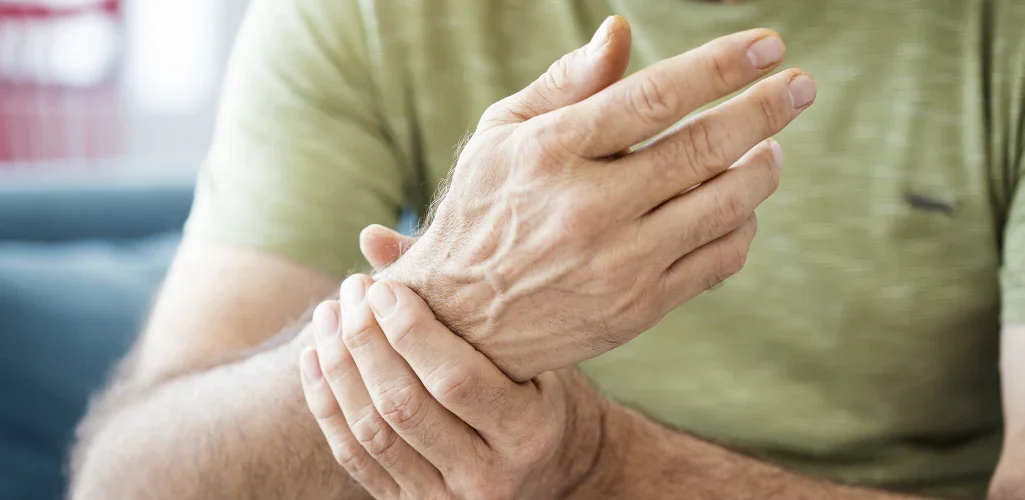
Low Level Inflammation is a Lifestyle Issue
Chronic, low-level inflammation is caused by a less-than-healthy lifestyle. It is currently being seen as the root source of many modern diseases. The 2 major causes are: 1) not enough healthy movement and 2) too much food and/or not the right kinds of food. In study after study, with a wide range of ethnic and population types, findings reveal that once people introduce healthier foods and more movement into their lives, their inflammatory markers, blood pressure, blood sugar, lipid levels (which indicate heart health), and most of their other medical health readings improve.
The reverse is also true. For example, I just read a study about people from Okinawa, Japan, a so-called Blue Zone with some of the healthiest and oldest people on the planet. When Okinawans move to the United States and start eating regular American diets and move less than they did their health declines. Clearly, this is not about genetics; it is about lifestyle.
We tend to manage the symptoms of low-level inflammation with drugs, either over-the-counter anti-inflammatories or more powerful prescription drugs. Relieving what the inflammation feels like does not cure the underlying cause. The problem will only get worse without getting to the root of it. And the root of it is a combination of a healthier natural diet along with more movement.
If It Doesn’t Move, Move It
There are many ways to reduce chronic inflammation. Start with a cleaner diet, better sleep, less or no added sugar, no sweeteners, less stress, and less or no alcohol and caffeine. Add increased movement of all kinds: walking, swimming, biking, yoga, Pilates, strength training, you name it. Anything that gets your body moving more and increases circulation will boost your immune system and increase its power. And make sure to pay particular attention to your joints, especially as you get older.
I’ve written about my right knee, which has become chronically stiffer due to the beginnings of osteo-arthritis on the outside of the knee joint. I have managed to stabilize it with yoga and strengthening exercises. I have learned how to work around it and with it, and it has definitely improved since the symptoms first appeared. I wish I had started doing the remedial work earlier, although I’m grateful that it isn’t worse than it is. Also, by continually moving and strengthening my knee, along with the related body parts that contributed to the issue (foot, leg, and hip), I’m able to alleviate any stiffness and pain and may be able to avoid a knee replacement.
Kelly Starrett wrote a classic book on movement called Becoming a Supple Leopard: The Ultimate Guide to Resolving Pain, Preventing Injury and Optimizing Athletic Performance. Like me, he dedicated the book to his daughters. The entire book could be summarized by the mantra, “If it doesn’t move, move it!” His book has been a valuable friend on my journey, and in the case of my knee, I wish I had read it sooner. Many of his techniques and observations about anatomy and the source of a problem are similar to the Iyengar yoga practices I follow, for example, how a problem is caused by the way multiple parts of the body move and interact, not just a specific joint or muscle. I highly recommend Starrett’s book.
So, is stiffness just a natural part of getting older, something we should just accept? No, not at all! Think of stiffness as a message, “My body is telling me something.” Personally, I am not afraid of feeling stiff. It is not a complaint or an excuse to rest. My body is simply saying that it needs attention. The attention I give it is to move and relieve the stiffness, as well as find new and better ways to do that, whether it’s a yoga pose I haven’t tried or a new way of strengthening or stretching. This keeps me flexible and alert to what’s happening inside me and offers cues, so I’m able to address issues as they come up. After all, staying healthy, being able to do the things we love to do, and spending time with the special people in our lives is the name of the game. Don’t let stiffness take that away from you.